1. What Is Reflection?
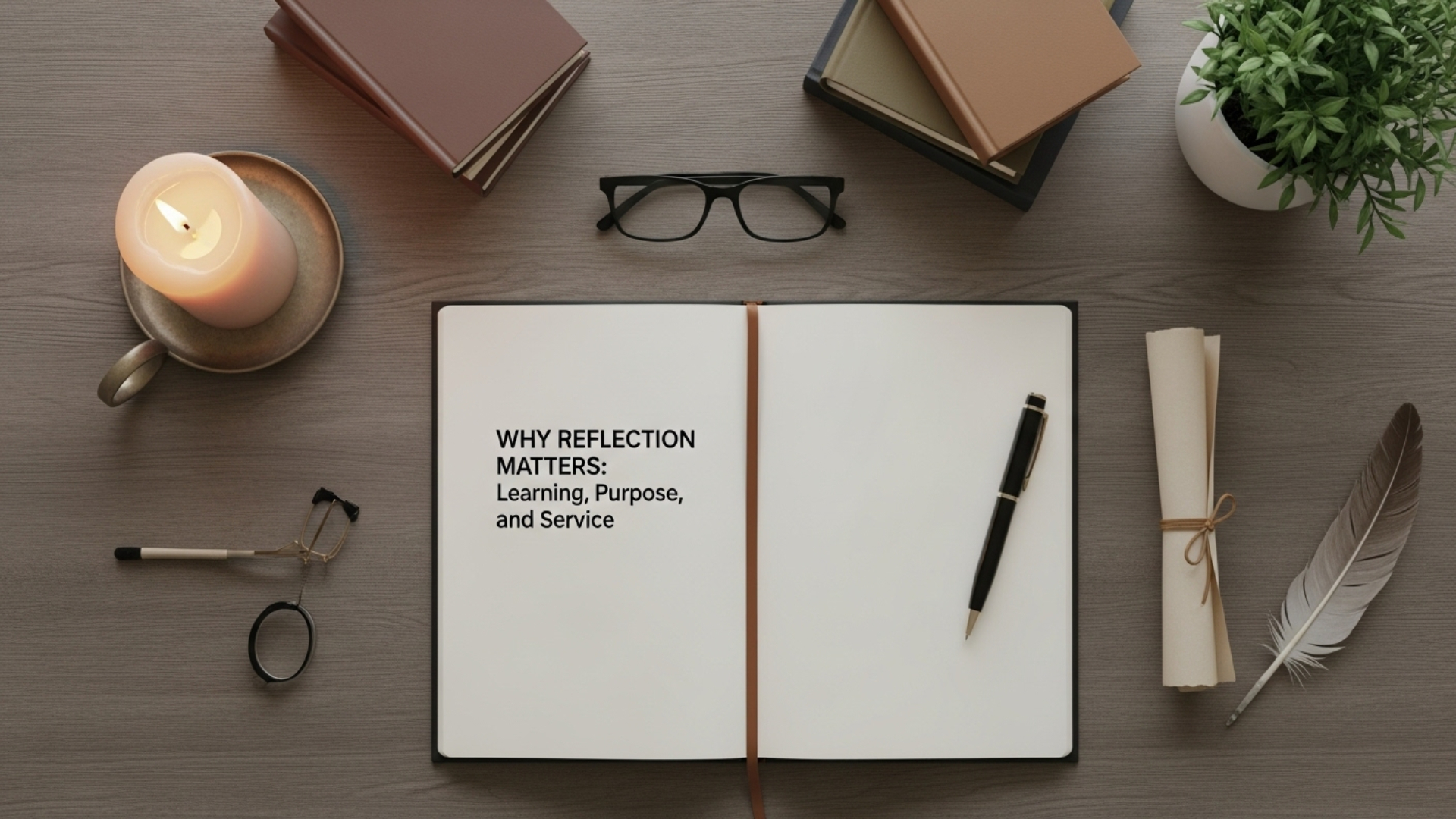
Reflection is the practice of stepping back from experience to consider what happened, why it happened, and what can be learned from it. It's about creating space to think deeply rather than constantly moving from one thing to the next. Reflection transforms experience into learning, helping us grow, improve, and find meaning in our lives and work.
In our busy world, reflection often feels like a luxury. There's always something demanding immediate attention, another task to complete, another problem to solve. But without reflection, we risk repeating the same patterns, missing opportunities to learn, and losing sight of what truly matters. Reflection isn't a luxury. It's essential for growth, learning, and purposeful living.
2. Reflection for Personal Growth
Personal reflection helps us understand ourselves better. It creates awareness of our patterns, our triggers, our strengths, and our areas for growth. When we reflect on our experiences, we notice things we might have missed in the moment. We see connections we didn't recognise at the time. And we gain insights that can guide future choices and actions.
Reflection for personal growth might involve:
- Considering how you responded to a difficult situation and what you might do differently next time
- Noticing patterns in your behaviour or emotional responses
- Identifying what brings you joy, energy, or meaning
- Recognising growth and changes over time
- Understanding what you value and whether your life aligns with those values
This kind of reflection builds self-awareness, which is the foundation for all personal development.
3. Reflection in Professional Practice
For anyone working in support services, reflection is essential for good practice. It helps you learn from experience, identify what works and what doesn't, and continually improve the support you provide. Reflective practice involves regularly stepping back to consider your work, your decisions, and their impact.
Professional reflection might include:
- Thinking about interactions with residents and what went well or could be improved
- Considering how your own emotions or biases might have affected a situation
- Learning from challenging moments rather than just moving past them
- Identifying patterns in your practice that might need attention
- Recognising when you need additional support, training, or supervision
Reflection in professional practice isn't about self-criticism. It's about honest, constructive learning that makes you better at what you do.
4. Learning from Experience
Experience alone doesn't guarantee learning. People can repeat the same mistakes for years if they don't reflect on them. Learning happens when we pause to consider what happened, why it happened, and what can be taken forward. Reflection is what transforms experience into wisdom.
To learn effectively from experience:
- Create space after significant events to think through what happened
- Consider multiple perspectives, not just your own
- Ask yourself what went well and what didn't
- Identify specific lessons or insights
- Think about how you'll apply what you've learned
This process doesn't have to be formal or lengthy. Even a few minutes of thoughtful reflection can yield valuable insights.
5. Finding Purpose Through Reflection
Reflection helps us connect with purpose and meaning. When we're caught up in daily demands, it's easy to lose sight of why we're doing what we're doing. Regular reflection creates space to reconnect with what matters, to check whether our actions align with our values, and to find meaning even in difficult work.
Reflective questions that connect to purpose might include:
- Why does this work matter to me?
- What difference am I making, even in small ways?
- Are my actions aligned with what I care about?
- What gives me a sense of meaning or fulfilment?
- How can I bring more purpose into my daily life?
Connecting with purpose through reflection sustains motivation and resilience, particularly during challenging times.
6. Reflection and Service to Others
When our work involves serving others, reflection helps us do that more effectively and sustainably. It helps us understand the people we're supporting better, recognise our impact, and identify how we can improve. It also helps us maintain compassion and avoid burnout by processing difficult experiences rather than just accumulating them.
Reflection in service to others involves:
- Considering the perspectives and experiences of those you support
- Thinking about power dynamics and how they affect relationships
- Noticing what you bring to interactions, both helpful and unhelpful
- Processing emotionally difficult work
- Celebrating successes and acknowledging when you've made a difference
This kind of reflection keeps the focus on the people being supported whilst also attending to your own wellbeing and growth.
7. Building a Reflection Practice
Reflection works best when it's regular rather than occasional. Building a reflection practice might involve:
- Setting aside specific time for reflection, perhaps weekly
- Keeping a reflective journal
- Using supervision or peer reflection sessions
- Building brief reflection into daily routines, like reflecting on the day each evening
- Using prompts or questions to guide reflection
- Balancing solitary reflection with reflection in conversation with others
Start small. Even five minutes of reflection regularly is more valuable than occasional lengthy sessions. What matters is creating the habit of stepping back and thinking deeply about your experiences.
8. Final Thoughts
Reflection is one of those practices that seems simple but is profoundly powerful. It transforms experience into learning, helps us grow personally and professionally, connects us with purpose, and improves our service to others. In work that involves supporting vulnerable adults, reflection isn't optional. It's essential for doing the work well and sustaining yourself in it.
If reflection isn't currently part of your practice, consider how you might build it in. Start with small, regular moments of stepping back and thinking. Notice what you learn. And let that learning guide you towards becoming the person and professional you want to be.