FUTURE(S): A Leader’s Guide to Rewriting the Rules of Work in 2025 | Welcome to the Jungle
How a culture of connection can begin with the people an organisation exists to serve
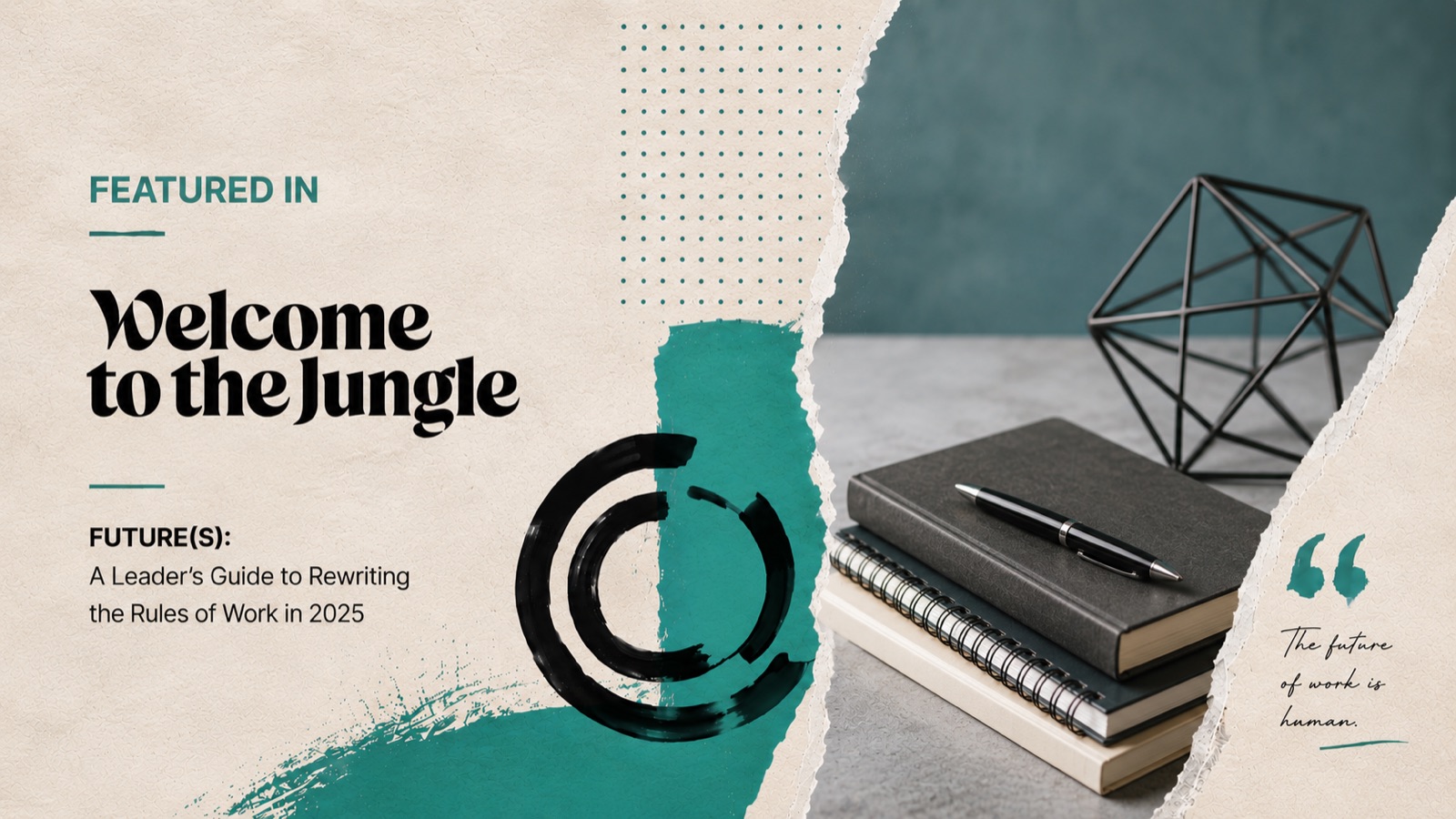
In January 2025, Welcome to the Jungle published FUTURE(S), a leader's guide to rewriting the rules of work, and included a case study on Apax. Apax is a supported housing social enterprise in Sydenham, South East London, and the case study appeared in the report's section on connection at work.
Written by Kammie Sumpter, the case study explored how Apax tries to build a culture rooted in purpose. Its central idea is a simple one: the way a team treats the people it supports shapes the way colleagues treat each other.
A Culture That Starts With Residents
Speaking to Welcome to the Jungle, Israa Qaddourah, project manager at Apax, put it plainly: “Our culture comes from our clients.” The report explained that Apax refers to the residents it supports as clients.
The case study described a shared purpose of helping residents move on from their past into independent living as active contributors to society. That purpose, it said, flows through every department, every team and every worker.
Starting with the people you serve changes the questions an organisation asks of itself. Instead of beginning with targets or structures, it begins with what residents need and works outwards from there, letting every other decision follow.
Kindness Flows Both Ways
Mauluda Saeed, accommodations manager, told the report that compassion and kindness must always be present in communication with residents. She explained that being human-centred towards clients also means being human-centred towards each other.
There is a quiet logic to this. A team that speaks warmly to residents but sharply to each other is unlikely to last. The habits people practise with colleagues tend to show up in every other conversation too, including the ones with residents.
Kindness at work is not the same as avoiding difficult conversations. It means being honest with gentleness and respect, so that people feel safe to say what they think and to ask for help when they need it.
Different Voices, One Purpose
The report highlighted United we shine, one of the core Apax values. Israa compared it to music, where many different notes blend into a single chord, to describe how people from different backgrounds can grow stronger together.
Charles Padie, support services lead, described a team of five direct reports and 23 indirect reports. He welcomed differences of opinion, but said shared values give everyone a roadmap towards a common purpose.
Connection does not depend on everyone thinking alike. It depends on people trusting that, beneath their differences, they are working towards the same thing. That trust makes honest disagreement possible and useful, rather than something to fear.
Listening From the Roots Up
Padie offered a memorable image: building culture only from the top would be like watering the leaves of a tree rather than its roots. For Apax, he said, the roots are the clients and the client-facing workforce.
Miria Papasofroniou, learning and development leader, described how goals are set each quarter. Individual goals come first, then team goals, then department goals and finally company goals, giving every worker a voice in the direction.
The report also described a non-adversarial, consultative approach to decisions, with feedback welcomed at every level. Our article on building values-driven organisations in supported housing looks at why shared values matter in this kind of work.
Getting to Know the Person
Clare Gray, quality management leader, told the report about a golden thread initiative linking values, departments, teams and individuals. Her team also developed a team charter built around two questions: what matters to the team, and how its members want to work together.
Another idea was the one-page profile, where each colleague introduces themselves on a single page. Gray's own profile mentioned her love of dogs, and profiles can include what matters most to someone and how best to support and motivate them.
Small gestures like these help people see one another as whole human beings rather than job titles. In work that asks a great deal emotionally, that recognition can help colleagues feel less alone.
Connection Across Distance
The case study noted that support teams work on site together each day, while head office teams are mostly hybrid, with set days in the office. Gray, who lives outside London, explained how she stays close to her team.
Her approach is about checking in rather than checking up. For Gray, that means looking beyond the work to the person, talking honestly about how colleagues are doing and how they can support each other.
Connection is rarely an accident. It grows through regular, genuine conversations and small acts of attention. Teams that make time for these find it easier to stay close when they are not in the same room.
The Future of Work Is Human
The report also mentioned ikigai, a Japanese idea about finding a reason to live through purpose, connection and joy. It is a fitting thought for any team whose daily work is helping others build a better life.
We are grateful to Welcome to the Jungle and to Kammie Sumpter for listening so closely, and to the colleagues who shared their experiences. There is always more to learn about connection, and residents remain our best teachers.
You can read the full case study in the FUTURE(S) report from Welcome to the Jungle: Apax: Deep change starts from within.