VR Project Aims to Improve Mental Health for Homeless | Digital Health
Why mental health and homelessness are best supported together
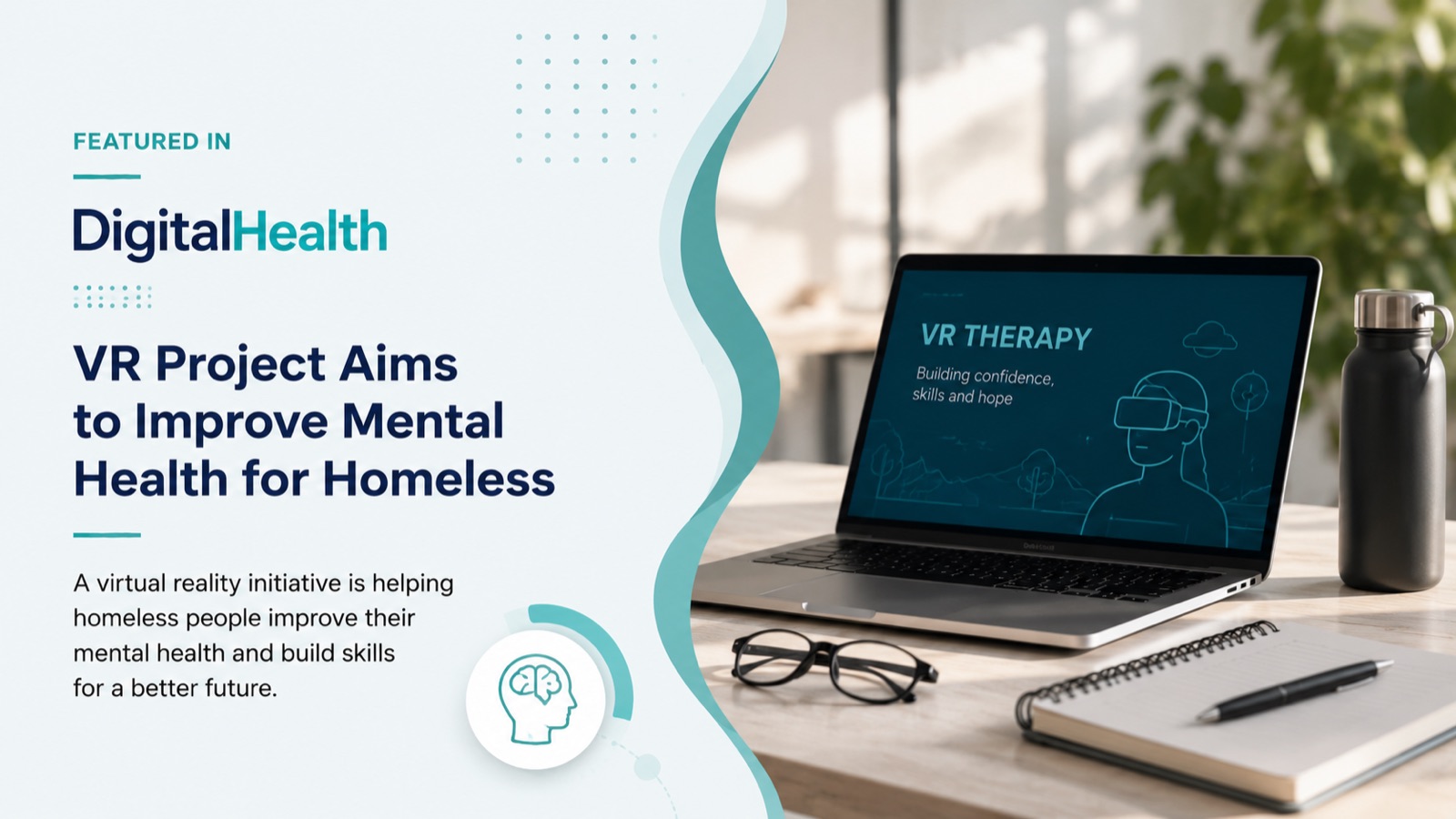
On 6 September 2024, Digital Health covered the virtual reality (VR) wellness programme at Apax, a supported housing social enterprise in Lewisham, South East London, under the headline VR project aims to improve mental health for homeless. The programme offers residents a new way to look after their wellbeing.
The headline brings together two challenges that are often treated separately. This piece explores why mental health and homelessness are so closely linked, and why support tends to work best when it addresses both at once.
Two Challenges, Closely Linked
According to the charity Crisis, as cited in a case study published by Insight UK, 45% of people experiencing homelessness have been diagnosed with a mental health issue. For people sleeping rough, the figure rises to 80%.
The two can feed each other. Poor mental health can make it harder to hold on to a home, and the stress of losing one can deepen anxiety, low mood and isolation. Each makes the other harder to address on its own.
Because the causes are so intertwined, it makes sense for the response to be intertwined too. A home without wellbeing support can feel fragile, while wellbeing support without a stable home has little to stand on. Support that sees both is more likely to last.
What Joined-Up Support Looks Like
Joined-up support means that the people helping someone with housing are also paying attention to how they feel, and that wellbeing is part of everyday conversations rather than a separate referral. It treats a person as a whole, not as a list of separate problems.
In supported housing, much of this happens through key workers. Insight's case study describes how Apax's key workers spend one-to-one time with residents, helping them with issues including mental wellness and digital exclusion.
This kind of relationship allows support to adapt. A key worker who knows a resident well can notice when something has changed and offer the right help at the right moment. Trust built over time makes those moments possible.
A Complement, Not a Replacement
According to the case study, Apax introduced immersive technology as a complementary recovery programme alongside traditional methods. That framing matters, because no single tool can meet every need or suit every person.
Residents use the TRIPP wellness platform through Meta Quest 2 headsets, with experiences selected to have a positive effect on mood. Our guide to virtual reality for mental wellbeing explains more about how this kind of technology works.
Offering VR alongside conversation, practical help and other services gives residents more ways to look after themselves. Different approaches can reach people at different times, and together they make support feel fuller. Residents can choose what feels right for them.
Partners Working Together
Joined-up support often depends on partnership. The case study describes how Apax extended its partnership with Meta and worked with Insight, a solutions integrator, to plan how best to use the hardware and choose suitable wellness applications.
What matters most is not the headset itself but whether residents choose to use it and find it helpful. A tool only earns its place when it fits easily into someone's day and feels like a choice rather than a requirement.
Each partner brought something different. Bringing technical expertise together with the everyday knowledge of the people who work with residents is what helps a promising idea become something useful. No partner could have done it alone.
Time Given Back to Relationships
One detail in the case study stands out. Because the programme is built on a digital platform, it removed the need for paper-based reporting, freeing key workers to give more quality support to residents.
Time is one of the most valuable things in any support service. Every hour spent on paperwork is an hour not spent listening, encouraging or helping someone take a practical step forward. Those moments are often where real progress begins.
When administrative tasks become lighter, relationships have more room to grow. For people whose mental health and housing needs are closely linked, a consistent and attentive relationship can be a vital source of stability.
Seeing the Whole Person
The case study notes that people who have experienced homelessness can also struggle with everyday life skills, which makes a future move to independent living more challenging. Mental health, practical skills and housing are all part of the same picture.
Seeing the whole person means recognising strengths as well as needs. Residents bring resilience, humour and hard-won experience, and good support builds on those qualities rather than focusing only on difficulties. Those strengths are a firm place to start.
It also means asking. The people living with these challenges every day know better than anyone what eases them, and building their views into support keeps it honest and relevant.
Joined-Up Support Ahead
According to the case study, the programme's success has led Apax to explore other uses for the headsets, including staff training and building digital skills among residents. The aim is to keep wellbeing and practical progress moving together.
Coverage like Digital Health's helps to bring the work of supported housing into wider conversations about health and technology. There is still much to learn, and every honest conversation about joined-up support helps the sector move forward. Every voice adds something useful.
You can read the full article in Digital Health: VR project aims to improve mental health for homeless.