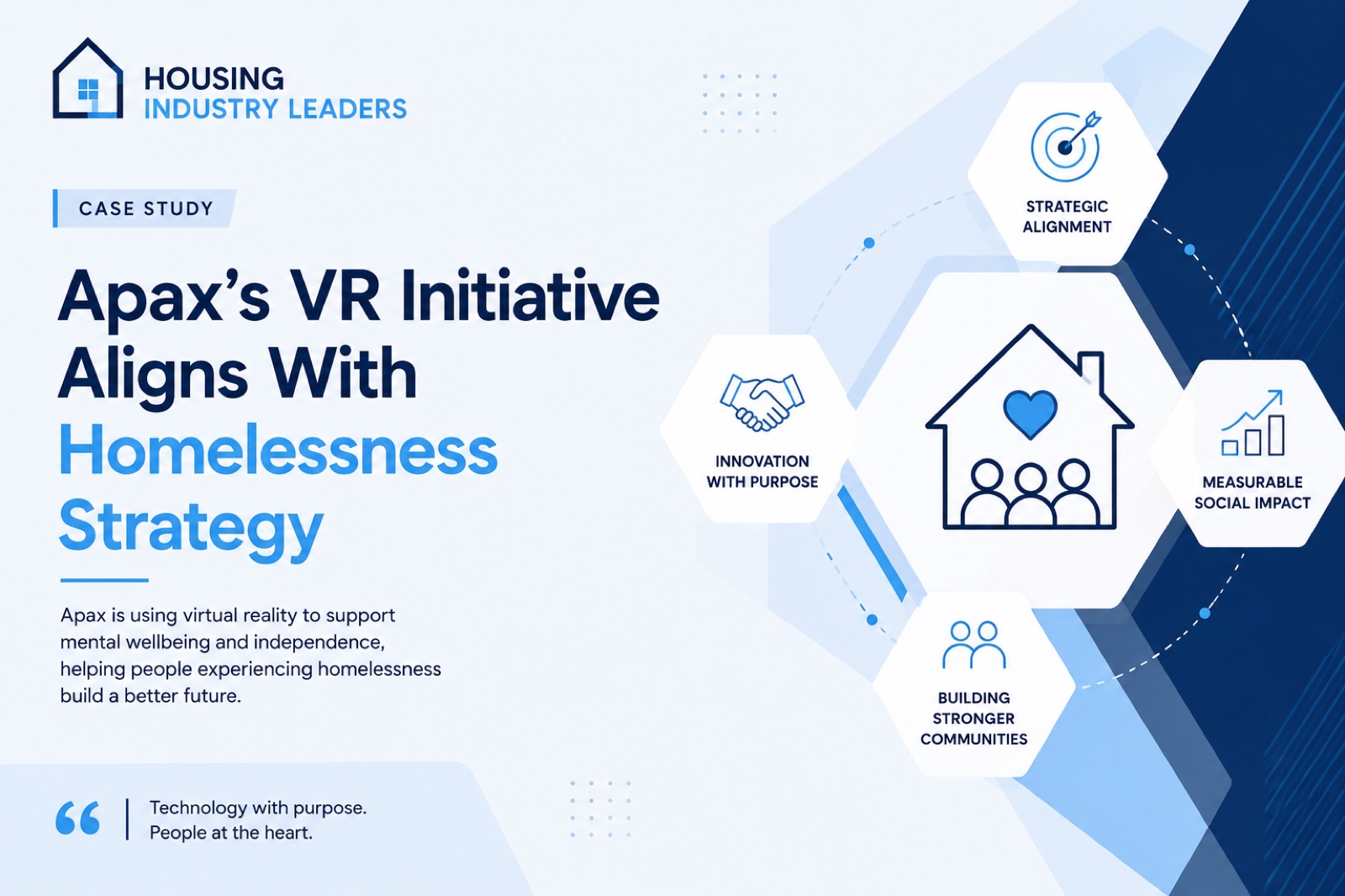
Apax’s VR Initiative Aligns With Homelessness Strategy | Housing Industry Leaders
How immersive technology can sit alongside national efforts to tackle homelessness and support mental health
In September 2024, Housing Industry Leaders published a feature on the virtual reality (VR) wellness programme at Apax, a supported housing social enterprise in Lewisham, South East London. The article explored how the programme sits alongside national priorities on homelessness and mental health.
It is a helpful reminder that local projects and national policy share the same goal. Both are about helping people find stability, rebuild their confidence and move towards independent lives.
Housing and Mental Health Go Together
Homelessness is rarely only about housing. For many people, losing a home is closely linked with stress, anxiety, depression or the lasting effects of trauma. Each of these can make it harder to find and keep somewhere stable to live.
This is why supported housing places so much value on wellbeing. A secure home provides the foundation, but feeling well enough to manage daily life, build relationships and plan ahead is what helps that foundation to hold.
When housing and mental health support work together, people have a better chance of moving forward with confidence. The two are not separate challenges but parts of the same journey, and progress in one often makes progress in the other feel more possible.
A New Tool in Supported Housing
The programme featured by Housing Industry Leaders uses a specialised VR app developed by TRIPP, delivered through Meta Quest headsets. It was introduced at Apax's supported housing services in Lewisham to help residents manage stress and ease feelings of anxiety and depression. Our guide to virtual reality applications for mental health and wellness explains more about how the technology works.
The app includes TRIPP's AI-powered virtual coach. For residents, it offers a private space to step away from everyday pressures, and a way to practise techniques that can help when life feels overwhelming.
Alongside wellbeing, the programme has also helped residents to develop digital skills. In a world where so much of daily life happens online, these skills can make a real difference when moving towards independent living.
Part of a Wider National Conversation
Housing Industry Leaders set the programme in the context of the government's plans to tackle homelessness. These include support for groups such as veterans, care leavers and people who have experienced domestic abuse.
The article also noted that Wes Streeting, the Secretary of State for Health and Social Care, has signalled a focus on patient autonomy and choice. This focus on the individual reflects the personalised approach that good support aims for.
National strategy and local services each have a part to play. Policy can set direction and priorities, while services on the ground can test new ideas and learn from the people they support.
Choice and Autonomy at the Centre
Everyone's path to wellbeing is different. What helps one person to feel calm and in control may not suit another, which is why choice matters so much in any form of support.
Tools like VR can give people more ways to look after their own wellbeing, at times and in ways that work for them. Having that choice can be empowering, particularly for people who have felt they had little control over their circumstances.
Respecting each person's pace is essential. Support works best when it is offered, not imposed, and when people feel free to explore what helps them without pressure. Some will take to new tools quickly, while others prefer more familiar approaches, and both are equally valid.
Measuring What Matters
Housing Industry Leaders reported the results Apax has seen from the programme: a 60% reduction in stress levels, a 90% increase in mental wellbeing and a 100% positive impact overall.
The programme has also been recognised with the Health Tech Digital Award for the best use of virtual reality, an accolade previously awarded to the NHS.
Behind each of these figures is a person who chose to try something unfamiliar. Their openness, and the honest feedback they have shared, is what allows the programme to keep learning and improving.
Working Together
No single organisation can end homelessness or meet every mental health need. Progress depends on councils, health services, charities, housing providers and communities working side by side.
Sharing what works, and what does not, helps everyone to improve. Features like this one play a valuable part by bringing local experience into a wider conversation across the housing sector. Partnership also means listening. Residents are the experts in their own lives, and their feedback is the most reliable guide to what is working and what needs to change. Building their views into every stage of a project helps to keep it grounded and useful.
There is much still to learn, and much to gain from listening to residents, partners and colleagues across the country. Every honest conversation, whether about success or difficulty, moves the sector a step closer to support that truly fits people's lives.
Looking Ahead
In the Housing Industry Leaders article, Israa Qaddourah, Project Manager at Apax, described the aim as being “to offer hope and practical solutions to those who need it most.”
That aim will continue to guide the work. Technology will keep changing, but the purpose stays the same: helping people feel well, find stability and build the independent lives they want.
You can read the full feature in Housing Industry Leaders: Apax’s VR Initiative Aligns With Homelessness Strategy.