Virtual Reality for Wellbeing: Apax Helps to Lead the Way with Insight | Insight
How choosing the right technology partner can turn a promising idea into something people actually use
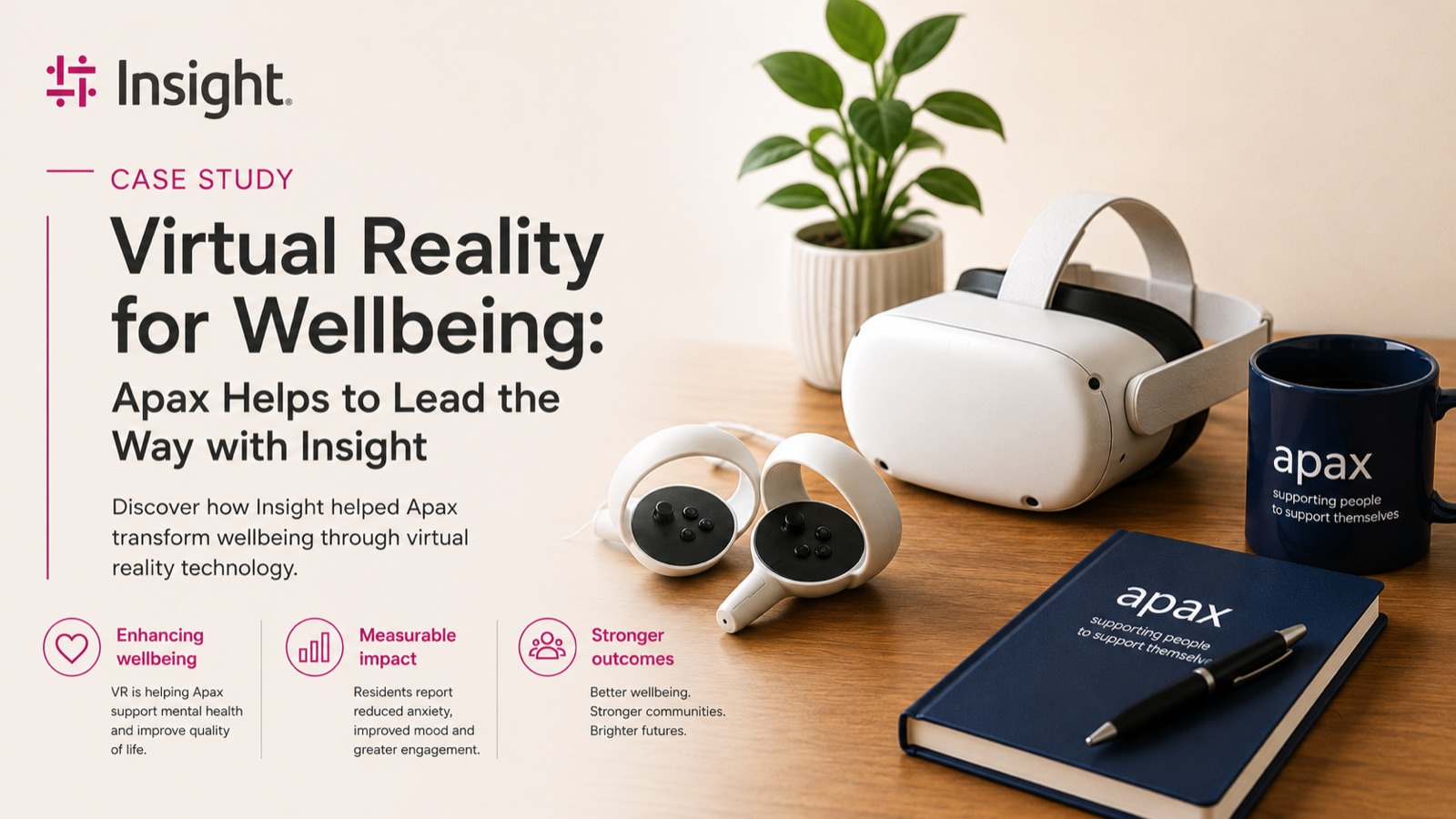
In 2024, Insight published a case study on how it worked with Apax, a supported housing social enterprise in Lewisham, South East London, to introduce the VR Wellness Programme. It described how Meta Quest 2 headsets, the TRIPP wellness platform and Insight's support came together for residents and key workers. Insight's support covered strategy, software licensing and the change management needed for a smooth roll-out.
It is a story about technology, but even more about partnership. Good ideas only make a difference when people feel ready, supported and confident enough to use them. The right partner can make that readiness far easier to reach.
Why Partnerships Matter
Small organisations rarely have every skill in house. Choosing hardware, comparing software and planning a roll-out all take specialist knowledge, and getting them wrong can leave equipment sitting unused in a cupboard. Most teams simply cannot be experts in everything at once.
A good partner fills those gaps without taking over. It listens first, learns how an organisation works and helps shape a plan that fits the people who will actually use the technology each day. Good partnerships are built on shared goals as much as technical skill.
That balance between expertise and humility is what turns a supplier into a partner, and it is often what decides whether something new takes root or quietly fades away.
Three Partners, One Programme
According to the case study, Apax extended its existing partnership with Meta and chose the Meta Quest 2 headset. It then recruited Insight, a solutions integrator, to build a strategy for making the best use of the hardware. Each partner brought a distinct strength to the work.
Insight's role included identifying the most suitable wellness applications and delivering a change management service, so that the new technology could be rolled out smoothly across the organisation.
Insight recommended the TRIPP wellness platform for its spatial audio and visual experience, and negotiated a software licence that gave Apax regular updates and a range of wellbeing experiences chosen to lift residents' moods.
Starting With Readiness
The case study highlighted Insight's discovery-based approach. Before building a plan, the team assessed Apax's readiness and existing skillsets, then shaped a strategy tailored to the organisation. That careful first step shaped everything that came after.
Beginning with readiness is a sensible lesson for any provider. Technology works best when it matches the confidence of the people using it, and when training moves at a pace that feels comfortable. Rushing rarely helps when people are learning something unfamiliar.
According to the case study, this tailored approach resulted in VR becoming embedded within the organisation's culture, rather than sitting on the edge as a one-off project.
Key Workers at the Centre
Key workers at Apax spend one-to-one time with residents, helping with issues including mental wellness and digital exclusion. The case study described how Insight enabled them to boost mental health recovery and promote digital inclusion.
Their involvement is what makes adoption real. A headset only becomes useful when a trusted person introduces it, explains it and is there to talk things through afterwards. Relationships remain the heart of the work, whatever the tool.
Moving to a digital platform also lifted a long-standing administrative load. With paper-based reporting gone, key workers had more time to offer quality support to the residents they work with.
Change Management, Gently Done
New tools can feel daunting, especially for people who have had limited access to technology. Change management, at its best, is simply about making sure nobody is left behind as things change. That is especially true in supported housing, where confidence can be fragile.
Insight's change management service was designed to ensure a smooth roll-out, as the case study explains. Our article on VR for mental health and wellness explores the wider uses of this kind of technology.
Patience, clear explanations and the freedom to try things at one's own pace all help. When people feel in control of a new tool, they are much more likely to keep using it.
In the Words of Apax
Anousha Vahdaty, CEO of Apax, said in the case study: “Insight put a huge amount of work into this project.” He also credited the team's blend of hardware, software and change management expertise.
That gratitude is sincere. Programmes like this are never the work of one organisation, and each partner brought something the others could not have provided alone. Gratitude is the right note on which to reflect on shared work.
According to the case study, the programme also helped residents feel calmer and more confident in everyday life. Those are outcomes that matter deeply to everyone involved.
Beyond Wellbeing Sessions
The case study noted that the programme's success had prompted Apax to explore other uses for the headsets, including staff training and building residents' digital skills across the organisation.
Strong partnerships make that kind of growth possible. When trust is already in place, new ideas can be tested together with less risk and more shared learning on all sides. A partnership that starts well can keep growing for years.
You can read the full case study from Insight: Virtual reality for wellbeing: Apax helps to lead the way with Insight.