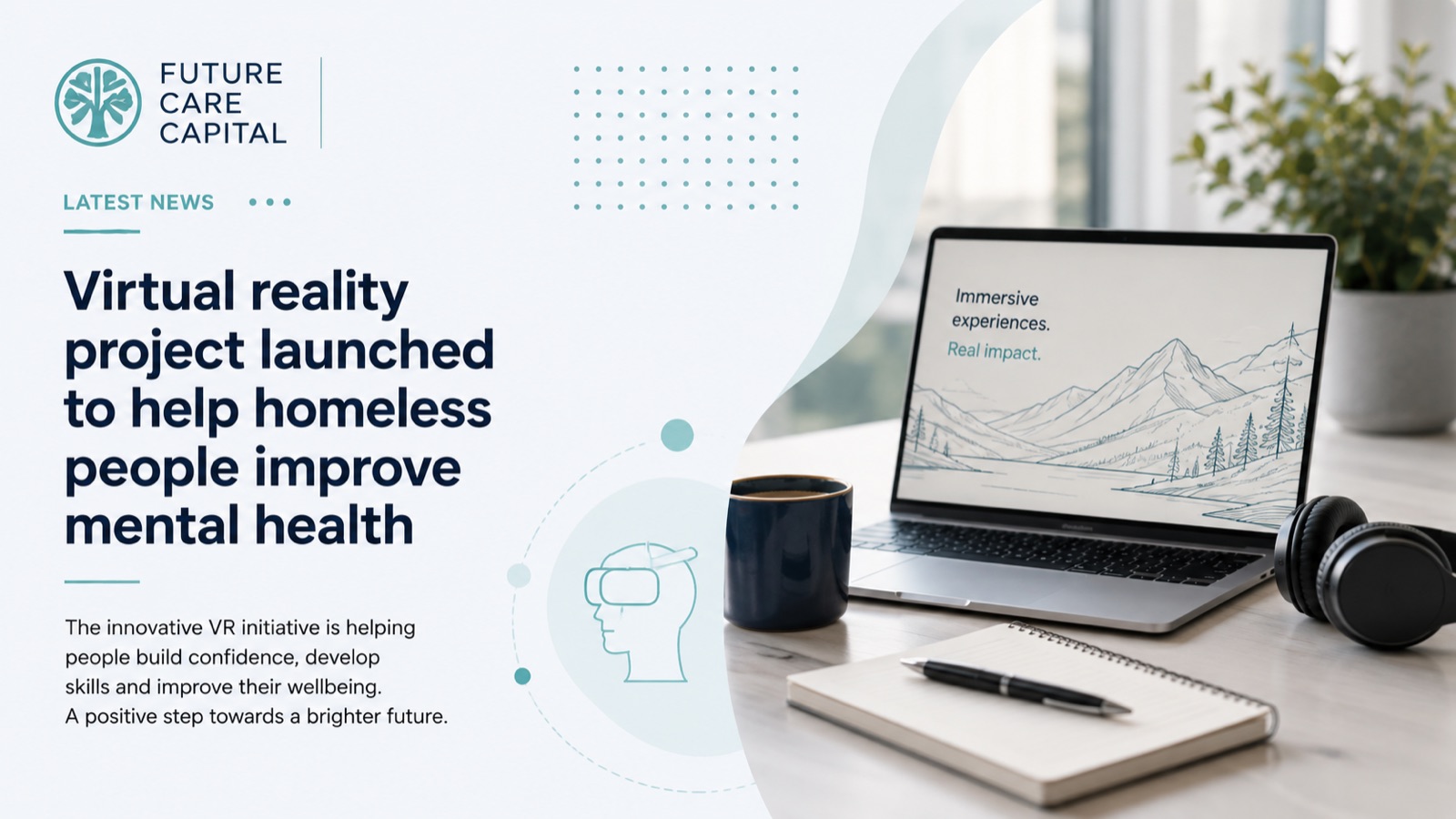
Virtual reality project launched to help homeless people improve mental health | Future Care Capital
Why testing an idea on a small scale first can help it grow well
On 9 September 2024, Future Care Capital reported on a virtual reality (VR) project at Apax, a supported housing social enterprise in Lewisham, South East London. The project uses VR to help residents who have experienced homelessness to improve their mental health and prepare for independent living.
What stands out in the report is how the project began. Before Apax decided to extend it to 140 residents, it started as a short pilot, a reminder that good ideas often grow best when they are tested first.
Starting Small on Purpose
New ideas carry uncertainty. However promising something looks on paper, nobody can be sure how it will feel to the people using it until they have had the chance to try it. Even well-researched plans meet surprises in practice.
Starting small reduces the pressure on everyone. Residents can approach something unfamiliar without feeling that a great deal rides on it, and staff can watch, listen and adjust before anything becomes routine. Small groups also make it easier to hear every voice.
A small start also makes it easier to change direction. If something is not working, a pilot gives everyone permission to learn from that openly rather than pressing on regardless.
The Eight-Week Pilot
According to the report, Apax ran an eight-week proof-of-concept pilot between November 2023 and January 2024. Residents used the TRIPP meditation app, accessed through Meta Quest 2 headsets that were donated by Meta.
TRIPP is powered by artificial intelligence and offers experiences designed for focus, resilience and peace of mind. Eight weeks gave residents time to discover whether those experiences fitted into their days. It was a manageable window in which to learn.
Apax reports that TRIPP has helped residents to reduce stress, manage their moods and develop digital skills which could help with independent living. Those signs gave the confidence to take the next step.
Getting the Foundations Right
A pilot is also a chance to get the practical details right. The report explains that Apax worked with Insight Enterprises, a systems integration firm, to work out how best to use the hardware and identify the most suitable wellness applications.
Insight organised the supply of headsets, the software licensing with TRIPP and the integration Apax needed, helping to ensure a smooth roll-out. Our guide to using VR for mental health and wellness explains more about the technology itself.
Getting these foundations right early means fewer surprises later. When a project grows, the technical side should feel almost invisible, so that attention stays on residents and how they are feeling. Nobody wants a promising session interrupted by a technical problem.
Learning From What Happens
The real value of a pilot lies in what it teaches. Feedback from residents, observations from staff and small practical lessons all help to shape what a wider programme should look like. It turns an idea into experience.
In any pilot, some of the learning is about the technology itself, such as when sessions fit best into the day. Much of it is about people, and what helps them feel comfortable trying something new. Both kinds of learning matter.
Honest learning includes what did not work as well as what did. Being open about both makes the next stage stronger and helps others who may be considering something similar.
From Pilot to 140 Residents
After the successful pilot, Apax decided to roll out the technology to 140 residents, according to the report. Growing from a small group to a whole service is a significant step, and the pilot helped to make it a considered one.
Scaling up brings its own questions. Equipment needs to be available, staff need to feel confident introducing it, and every new resident deserves the same thoughtful welcome as the first people who tried it. Each of those details deserves time and attention.
A pilot does not answer every question in advance, but it builds a shared understanding that makes those questions easier to work through together as a programme reaches more people.
Partners Who Share the Aim
The report included comments from partners. Davi de Andrade, services development executive at Insight UK, said: “We had an opportunity to make a real difference to people’s lives.”
Era Sahni, director of B2B channel partnerships at Reality Labs at Meta, also welcomed the project and the role Meta Quest was playing in helping vulnerable people back into society.
Pilots work best when partners are willing to learn alongside each other. Shared goals make it easier to adapt plans, solve problems and keep the people who benefit at the centre of every decision. That shared commitment keeps a project grounded.
From Pilot to Practice
According to the report, plans are underway to explore using VR within Apax to train staff and to improve residents' life skills and digital competence. Each of these ideas could follow the same pattern of testing, listening and then growing.
That pattern is not unique to technology. Whether it is a new activity, a new way of working or a new partnership, trying something on a small scale first helps everyone to build on solid ground. Patience at the start often pays off later.
You can read the full report in Future Care Capital: Virtual reality project launched to help homeless people improve mental health.